What is a role-playing quest?
Articles
27.09.2024
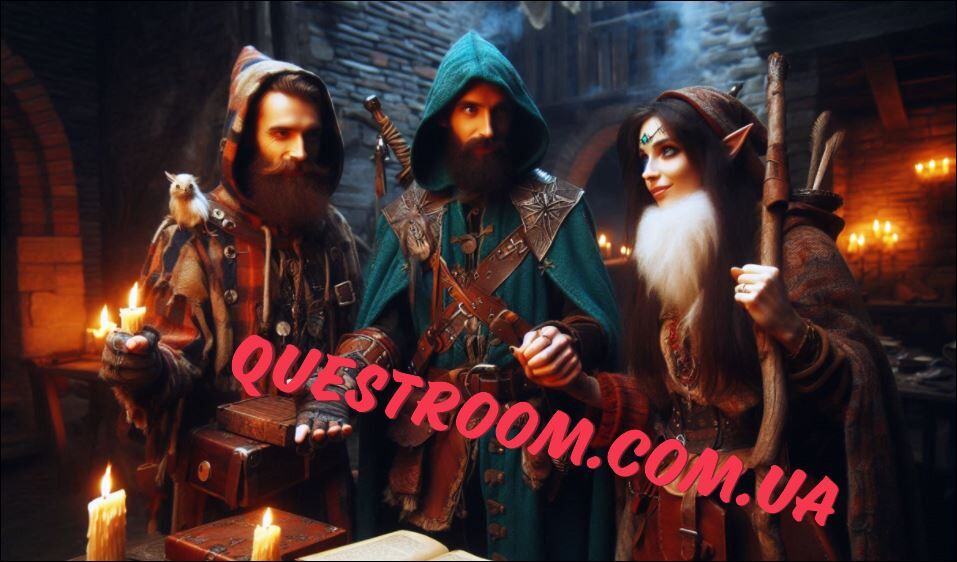
Do you dream of being on a pirate ship or finding a lost treasure? Or maybe you want to try on the role of a brave investigator who is trying to solve a mysterious crime in an interrogation room? Or dare to go to an abandoned prison, where ghosts roam, according to legend, and unravel their secrets? How about planning the perfect bank robbery or going on an exciting journey through time? Or maybe you want to immerse yourself in the mystical legend of the Templars and uncover the ancient secrets of their order? All this is possible thanks to a role-playing quest that embodies the most incredible scenarios and makes them part of your adventure! What is a role-playing quest? This is a game where participants transform into heroes of a fascinating story and become part of an exciting experience. The quest is based on a common plot: find treasure, hide from pursuers or save the world. Each hero has their own unique traits and personal goals. You can become a mysterious spy, a great archaeologist, a legendary pirate, a time traveler or a famous detective. Unforgettable emotions, fights with enemies and intriguing riddles await all participants of such entertainment!
Why are role-playing quests so popular?
This format of adventure offers a unique emotional experience: you will be able to do things that are unlikely to ever happen in real life. Everything depends only on your actions! You need to show your skills of persuasion, cunning, the ability to negotiate and add a little courage.
Advantages of a role-playing quest:
interactive participation - you play the main role and influence the development of the plot with your decisions, and do not just watch from the sidelines;
live communication - success depends not only on logic, but also on the ability to negotiate, improvise and show charisma;
everyone is involved - all players are actively involved, no one is left out;
unusual sensations - the opportunity to try on the role of a king, a Templar or a time traveler;
team building — the need for joint actions improves teamwork and unites participants;
discovery of new talents — help to reveal unexpected abilities, such as leadership or public speaking skills.
But what does a role-playing quest mean? It is an interactive process that allows you to become part of an exciting story, where every step and decision matters. Despite the fact that all this happens within the framework of a game, the emotions you experience are absolutely real. The process itself gives the opportunity to accumulate vivid impressions and learn a lot about yourself. Perhaps you will discover hidden talents in yourself and find out that you could become an excellent spy or movie star.
History of role-playing quests
The first role-playing games began to develop in the middle of the 20th century. Their roots go back to tabletop role-playing games, such as the famous "Dungeons & Dragons", created in 1974, where players played out various scenarios and embodied characters in imaginary worlds. These games were the basis for the formation of the first live role-playing quests.
Interestingly, such games drew inspiration not only from board games, but also from theatrical productions. Participants transformed into characters, playing out stories as if on stage, but in an interactive form. Also, the development of role-playing quests was influenced by live combat games - reconstructions of historical battles that allowed players to try on the role of warriors from different eras.
Over time, role-playing quests began to evolve, offering more and more opportunities for interactive participation. In the 90s and 2000s, they gained popularity in Europe and the USA, and began to include more complex plots, technical innovations, elements of virtual reality and high safety standards.
Main elements of role-playing quests
Each game is built on several key components that determine the course of the plot, the interaction of characters and the development of events. Without these elements, the quest would not be so exciting and interactive. Let's consider them in more detail:
The plot is the basis of the entire game, which determines its direction and theme. They can be very different: from exciting adventures and detective investigations to mystical legends and fantasy worlds.
Characters - participants receive roles, each of which has unique traits, goals and tasks. Each character is not just a figure in the game, but a full-fledged person with their own ambitions, motivation and character. The player's task is to get into the role as much as possible and act on behalf of their hero.
Mechanics are the rules that determine how interaction with the environment, objects and other characters occurs. It can include solving puzzles, completing tasks, using game items or interacting with NPCs (non-player characters). This is the part of the quest that helps the game be interactive and dynamic.
Player skills - success in the quest largely depends on the personal abilities of visitors. The ability to negotiate, make quick decisions, solve problems and navigate in uncertain conditions
Why are role-playing quests so popular?
This format of adventure offers a unique emotional experience: you will be able to do things that are unlikely to ever happen in real life. Everything depends only on your actions! You need to show your skills of persuasion, cunning, the ability to negotiate and add a little courage.
Advantages of a role-playing quest:
interactive participation - you play the main role and influence the development of the plot with your decisions, and do not just watch from the sidelines;
live communication - success depends not only on logic, but also on the ability to negotiate, improvise and show charisma;
everyone is involved - all players are actively involved, no one is left out;
unusual sensations - the opportunity to try on the role of a king, a Templar or a time traveler;
team building — the need for joint actions improves teamwork and unites participants;
discovery of new talents — help to reveal unexpected abilities, such as leadership or public speaking skills.
But what does a role-playing quest mean? It is an interactive process that allows you to become part of an exciting story, where every step and decision matters. Despite the fact that all this happens within the framework of a game, the emotions you experience are absolutely real. The process itself gives the opportunity to accumulate vivid impressions and learn a lot about yourself. Perhaps you will discover hidden talents in yourself and find out that you could become an excellent spy or movie star.
History of role-playing quests
The first role-playing games began to develop in the middle of the 20th century. Their roots go back to tabletop role-playing games, such as the famous "Dungeons & Dragons", created in 1974, where players played out various scenarios and embodied characters in imaginary worlds. These games were the basis for the formation of the first live role-playing quests.
Interestingly, such games drew inspiration not only from board games, but also from theatrical productions. Participants transformed into characters, playing out stories as if on stage, but in an interactive form. Also, the development of role-playing quests was influenced by live combat games - reconstructions of historical battles that allowed players to try on the role of warriors from different eras.
Over time, role-playing quests began to evolve, offering more and more opportunities for interactive participation. In the 90s and 2000s, they gained popularity in Europe and the USA, and began to include more complex plots, technical innovations, elements of virtual reality and high safety standards.
Main elements of role-playing quests
Each game is built on several key components that determine the course of the plot, the interaction of characters and the development of events. Without these elements, the quest would not be so exciting and interactive. Let's consider them in more detail:
The plot is the basis of the entire game, which determines its direction and theme. They can be very different: from exciting adventures and detective investigations to mystical legends and fantasy worlds.
Characters - participants receive roles, each of which has unique traits, goals and tasks. Each character is not just a figure in the game, but a full-fledged person with their own ambitions, motivation and character. The player's task is to get into the role as much as possible and act on behalf of their hero.
Mechanics are the rules that determine how interaction with the environment, objects and other characters occurs. It can include solving puzzles, completing tasks, using game items or interacting with NPCs (non-player characters). This is the part of the quest that helps the game be interactive and dynamic.
Player skills - success in the quest largely depends on the personal abilities of visitors. The ability to negotiate, make quick decisions, solve problems and navigate in uncertain conditions