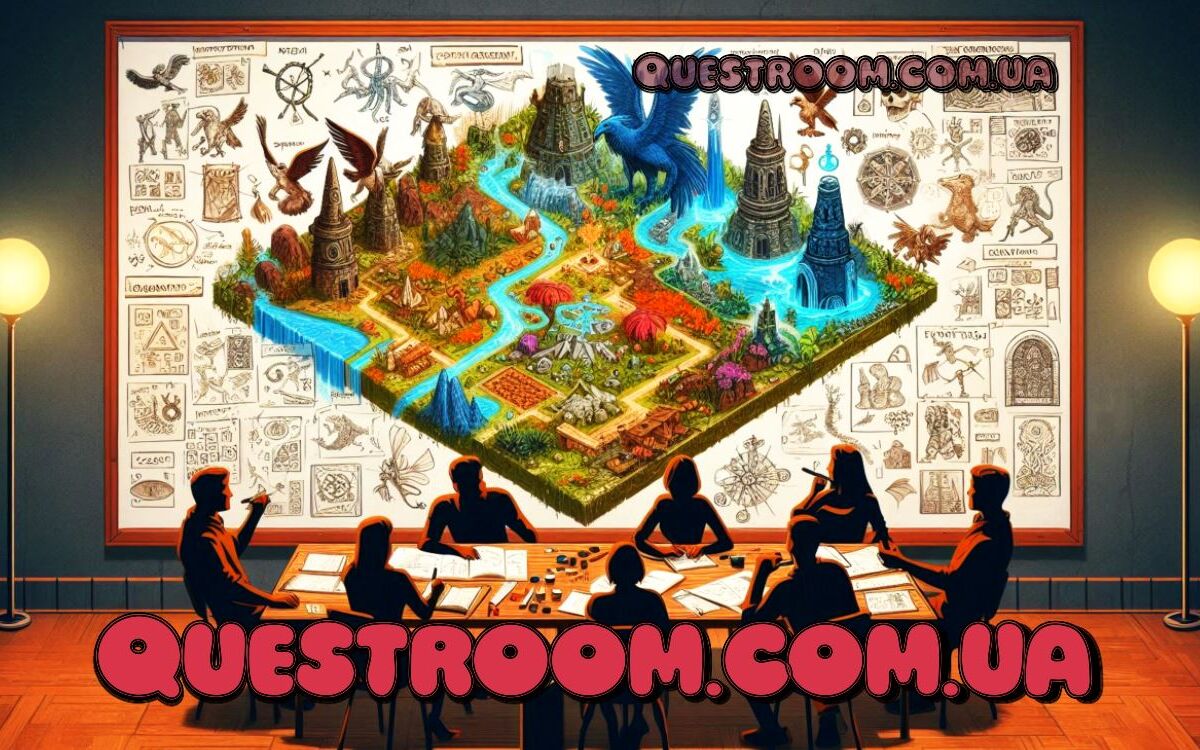
How are quests created? How to write a script
Articles
07.11.2024
Creating quests is a process that combines creativity, technical knowledge and careful organization. Each quest is a unique adventure that requires developing a script, puzzles and decorating the space. In this article, we will take a detailed look at how quests are developed and how to write a quest room script so that participants get vivid emotions and unforgettable impressions.
Organizing a quest is a way to please customers by offering them unique adventures. Quest rooms are in demand for various events: they are great for team building, birthday celebrations and just friendly gatherings. An important element of the popularity of quests is a carefully developed script, because it sets the general tone and atmosphere of the game. Stages of creating a quest
The process of developing a quest can be divided into several key stages:
1. Idea and concept
The first step is developing an idea. You need to come up with a main theme around which the entire quest will be built. This can be a quest in the style of a detective, adventure, fantasy or horror. Ideas for quests should be interesting and relevant to the target audience.
2. Writing a script
After choosing an idea, the development of a quest script begins. It should include all the key elements: introduction, main plot and ending. It is important to think about what riddles and puzzles will be offered to participants, how they will be interconnected with the story, and how players will interact with the environment.
3. Developing a location
Quest scenarios involve the use of various premises that should correspond to the theme of the quest. Depending on the type of game, this can be an abandoned house, a secret laboratory or even a spaceship. The design of the quest room plays an important role, creating an atmosphere and immersion in the story.
4. Planning riddles
Riddles are the basis of any quest. Riddles should be varied and exciting, but not too difficult, so that participants do not get stuck at one stage. It is important that each puzzle is logically connected to the plot and helps move the story forward.
5. Testing
Before the quest is opened to visitors, it must be tested. Developers and test players check how well the riddles work, how interesting the scenario is and whether there are any technical failures in the equipment. This allows you to identify weak points and make the quest as interesting and exciting as possible.
1 Determine the theme and genre. It can be a detective, fantasy, horror or something else. The entire further structure of the quest depends on this choice.
Create a story. This is the basis of the scenario. It should be interesting and exciting. For example, the participants can become detectives investigating a crime, or travelers stuck in a mysterious world. The more developed the story is, the easier it will be for the players to immerse themselves in the process.
Write plot twists. It is important to think about what unexpected moments or challenges await the players during the game. These elements make the quest more exciting and unpredictable.
Develop tasks and riddles. All tasks and puzzles should be part of the plot. They not only advance the game, but also allow the participants to uncover new details of the story. For example, to solve a code or open a lock, players will have to collect clues as the game progresses.
Consider time and dynamics. The quest should be dynamic, but not too fast. It is important to correctly distribute difficult and simple tasks so that the players do not lose interest and can consistently move forward.
A well-developed scenario provides not only an exciting gameplay, but also unforgettable emotions for the players, making each game unique and exciting. Summing up
Creating a successful quest is a complex and multi-stage process that includes developing a quest scenario, working out the riddles and decorating the room. Quest room scenarios should be exciting and thought out to the smallest detail so that participants get the most out of the game.
To create a quality quest, it is necessary to take into account many factors: from the idea and theme to the design and final testing. Ideas may be different, but success always depends on the competent development of all the details.
Why create a quest?
Quests have become a popular form of entertainment for both children and adults. These are not just games - they are an opportunity to experience an exciting adventure, become the hero of an unusual story and interact with other players. Creating quests opens up new horizons for developers and allows you to implement ideas that can surprise, inspire and captivate participants.Organizing a quest is a way to please customers by offering them unique adventures. Quest rooms are in demand for various events: they are great for team building, birthday celebrations and just friendly gatherings. An important element of the popularity of quests is a carefully developed script, because it sets the general tone and atmosphere of the game. Stages of creating a quest
The process of developing a quest can be divided into several key stages:
1. Idea and concept
The first step is developing an idea. You need to come up with a main theme around which the entire quest will be built. This can be a quest in the style of a detective, adventure, fantasy or horror. Ideas for quests should be interesting and relevant to the target audience.
2. Writing a script
After choosing an idea, the development of a quest script begins. It should include all the key elements: introduction, main plot and ending. It is important to think about what riddles and puzzles will be offered to participants, how they will be interconnected with the story, and how players will interact with the environment.
3. Developing a location
Quest scenarios involve the use of various premises that should correspond to the theme of the quest. Depending on the type of game, this can be an abandoned house, a secret laboratory or even a spaceship. The design of the quest room plays an important role, creating an atmosphere and immersion in the story.
4. Planning riddles
Riddles are the basis of any quest. Riddles should be varied and exciting, but not too difficult, so that participants do not get stuck at one stage. It is important that each puzzle is logically connected to the plot and helps move the story forward.
5. Testing
Before the quest is opened to visitors, it must be tested. Developers and test players check how well the riddles work, how interesting the scenario is and whether there are any technical failures in the equipment. This allows you to identify weak points and make the quest as interesting and exciting as possible.
How to write a script for a quest?
The script is the basis of the quest. The quest script must be carefully thought out so that players can fully immerse themselves in the atmosphere and enjoy the game. Here are a few steps that will help in developing a quest script:1 Determine the theme and genre. It can be a detective, fantasy, horror or something else. The entire further structure of the quest depends on this choice.
Create a story. This is the basis of the scenario. It should be interesting and exciting. For example, the participants can become detectives investigating a crime, or travelers stuck in a mysterious world. The more developed the story is, the easier it will be for the players to immerse themselves in the process.
Write plot twists. It is important to think about what unexpected moments or challenges await the players during the game. These elements make the quest more exciting and unpredictable.
Develop tasks and riddles. All tasks and puzzles should be part of the plot. They not only advance the game, but also allow the participants to uncover new details of the story. For example, to solve a code or open a lock, players will have to collect clues as the game progresses.
Consider time and dynamics. The quest should be dynamic, but not too fast. It is important to correctly distribute difficult and simple tasks so that the players do not lose interest and can consistently move forward.
A well-developed scenario provides not only an exciting gameplay, but also unforgettable emotions for the players, making each game unique and exciting. Summing up
Creating a successful quest is a complex and multi-stage process that includes developing a quest scenario, working out the riddles and decorating the room. Quest room scenarios should be exciting and thought out to the smallest detail so that participants get the most out of the game.
To create a quality quest, it is necessary to take into account many factors: from the idea and theme to the design and final testing. Ideas may be different, but success always depends on the competent development of all the details.